Programs & Services
SMAMHC has funded or supported a broad continuum of community-based services and regional infrastructure across its 18-county region.
Key Programs & Services
SMAMHC has funded or supported a broad continuum of services, including, but not limited to:
- Assertive Community Treatment (ACT)
- Adult Rehabilitative Mental Health Services (ARMHS)
- Adult Mobile Crisis Services
- Crisis Stabilization Services
- Community Support Programs
- Intensive Residential Treatment Services (IRTS)
- Targeted Case Management
- Supported Employment & Individual Placement and Support (IPS)
- Peer Support Services
- Housing Subsidies & Housing Supports
- Community Education & Outreach
- Flexible Client Assistance Funds
- Transportation Assistance
- Diagnostic Assessment & Outpatient Mental Health Services
The Three Core Functions of Adult Mental Health Initiatives
SMAMHC plays a critical role in Minnesota’s mental health system through three core functions:
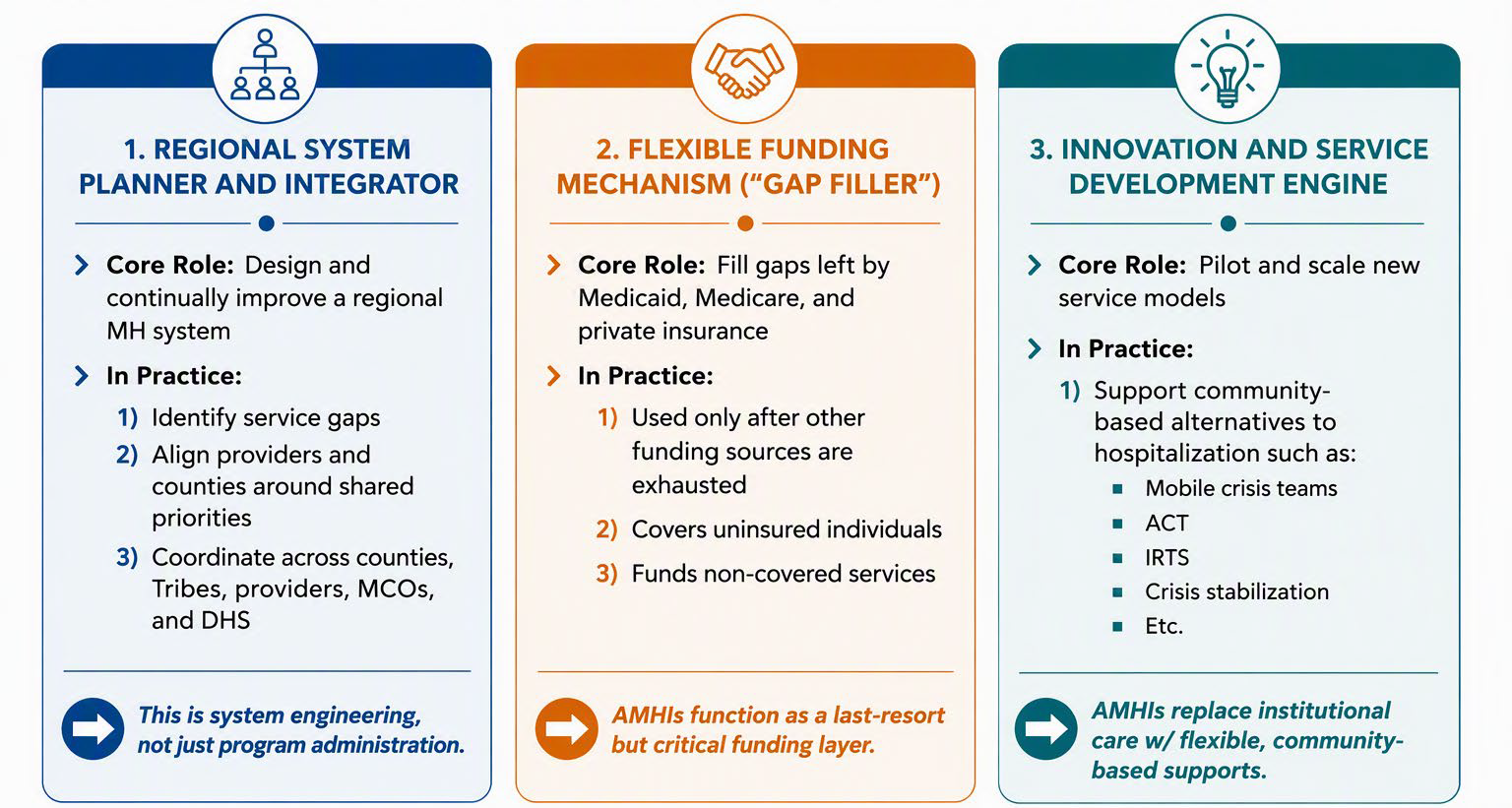
1. Regional System Planner & Integrator
Core Role: Design and continually improve a regional mental health system.
In Practice:
- Identify service gaps
- Align providers and counties around shared priorities
- Coordinate across counties, Tribes, providers, MCOs, and DHS
This is system engineering, not just program administration.
2. Flexible Funding Mechanism (“Gap Filler”)
Core Role: Fill gaps left by Medicaid, Medicare, and private insurance.
In Practice:
- Used only after other funding sources are exhausted
- Covers uninsured individuals
- Funds non-covered services
AMHIs function as a last-resort but critical funding layer.
3. Innovation & Service Development Engine
Core Role: Pilot and scale new service models.
In Practice: Support community-based alternatives to hospitalization such as:
- Mobile crisis teams
- ACT
- IRTS
- Crisis stabilization
AMHIs replace institutional care with flexible, community-based supports.